It’s hard to imagine what a person feels when facing the threat of losing their life,
being imprisoned, or being sent to a labor camp in their own war-torn country.
I have the impression that the part of society reluctant to help refugees fleeing war
or simply seeking a better life has forgotten its own history – for example, when during
World War II countries around the world provided shelter to us. In Poland, xenophobia,
indifference, and selfishness are widespread. The fear-based narrative promoted by
the government, which portrays foreigners as a threat, only fuels these attitudes.
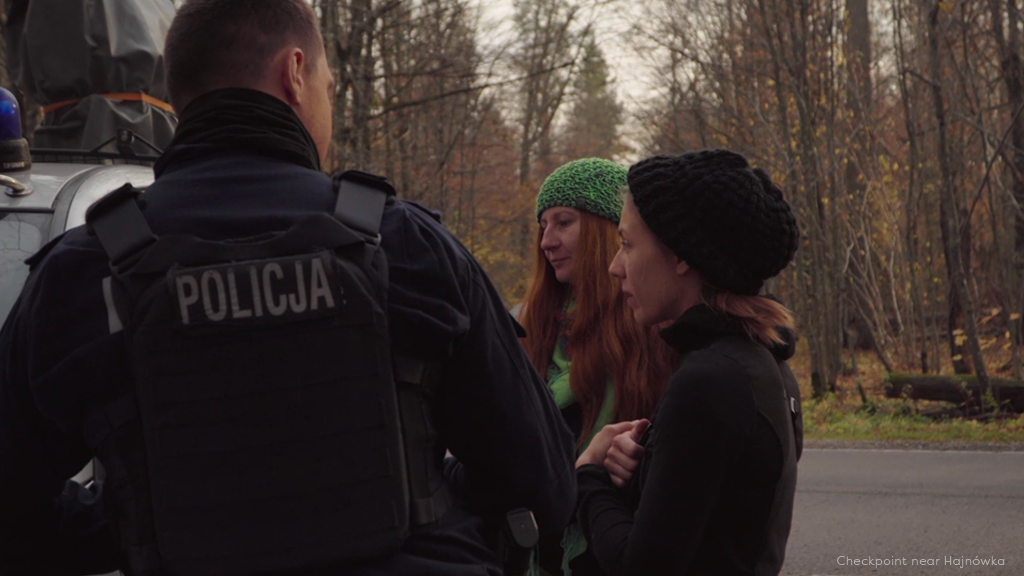
Cities near the Polish-Belarusian border were designated as “red zones,”
where no one except local residents and uniformed services was allowed to enter.
This created a tragic situation: no humanitarian aid could reach refugees whose lives
were in danger. Exhausted from wandering and suffering from the brutal actions of both
Polish and Belarusian border services, these people were trapped in a deadly situation.
The information blackout experienced by the Polish public at that time prompted me to devise
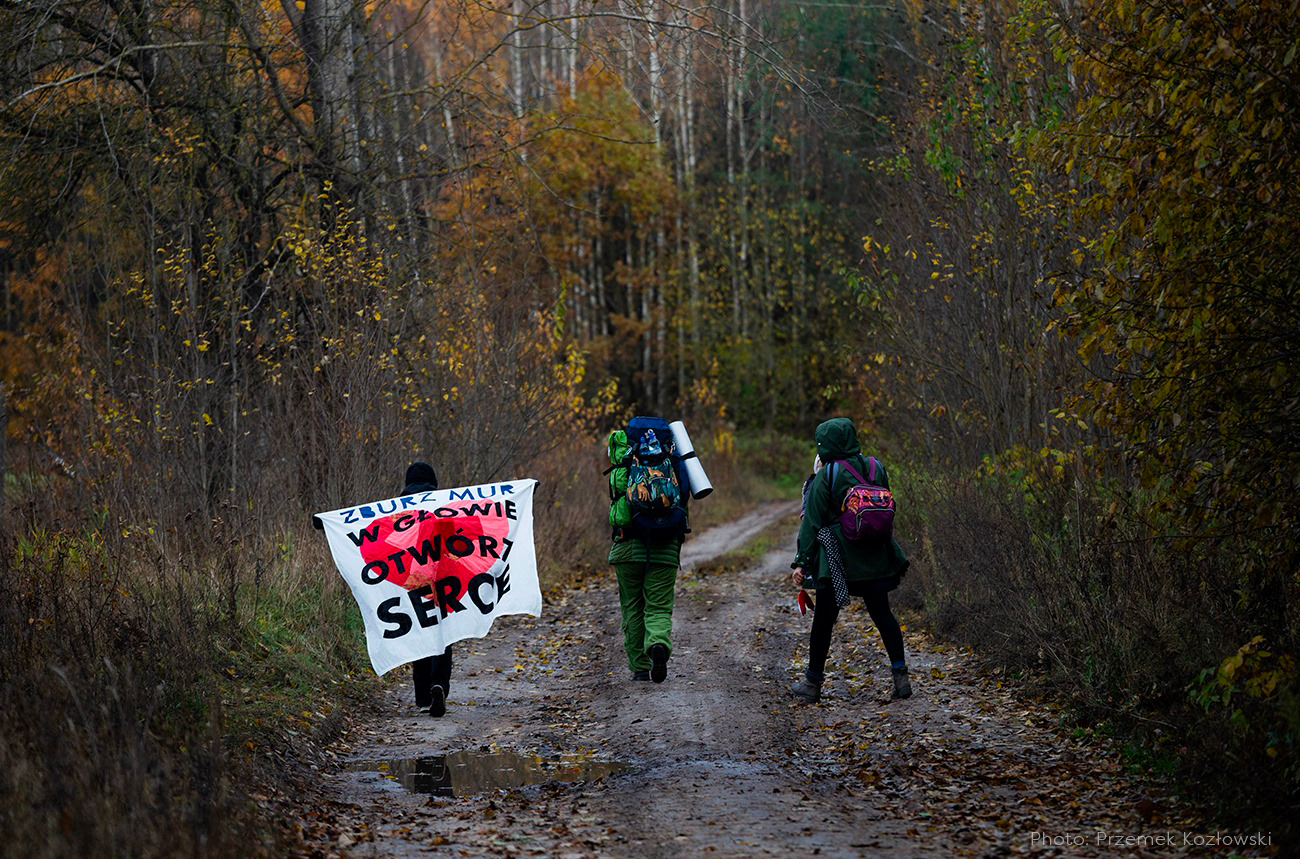
an action that could raise awareness about the situation at the border. First, I chose the
“Tear Down the Wall in Your Mind – Open Your Heart” slogan. I used it for the first time
during the STOP TORTURE AT THE BORDER! protest organized by the Kraków branch
of the Families Without Borders organization. During this event, I met Agata Kluczewska –
founder of the Wolno Nam Foundation, which provides humanitarian aid to people
affected by the refugee crisis at the border. A week after our first meeting,
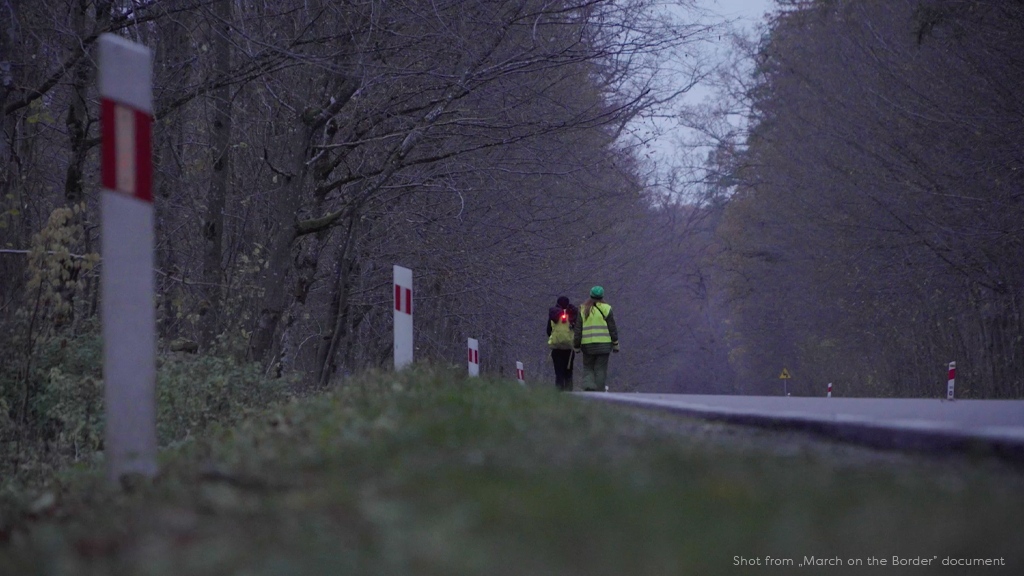
we traveled together to Podlasie to begin the “March on the Border.”
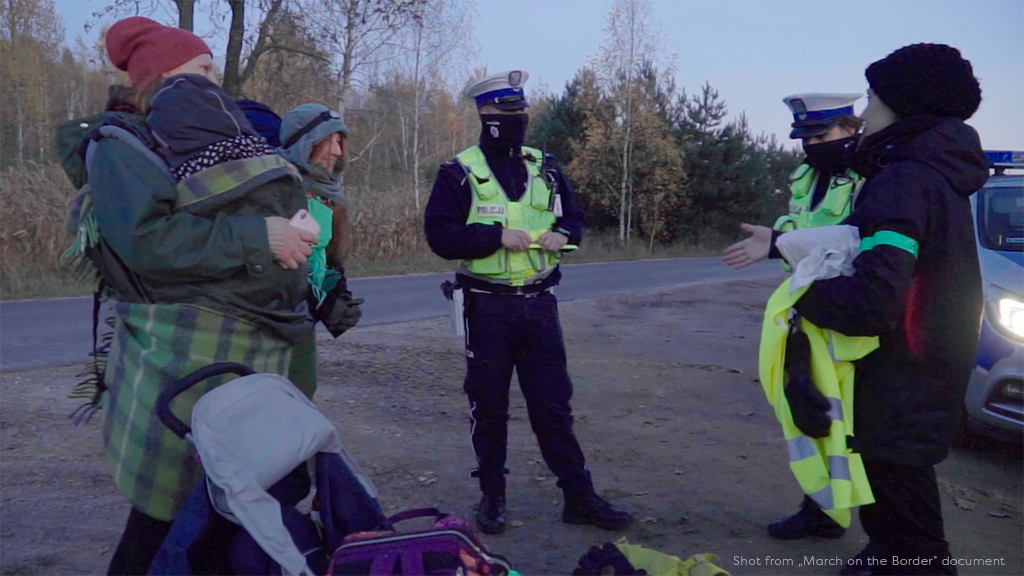
Several others joined us—performance artist Joanna Szustopol with her 16-month-old
daughter Róża, as well as Filip Lisowski and Jędrzej Derouiche, who documented
our action. It was an act of solidarity with those trapped in the forests at the border
and with the activists providing them with humanitarian aid. Our goal was to break out of
our own social bubble and spread the message that helping those in need is legal.
This allowed us to reach a wide range of people with different views and share
our testimonies. Our 100-kilometer march was inspired by the “March to Aleppo,”
initiated by Anna Alboth in December 2016. It all stemmed from our refusal to accept
human rights violations and the dehumanization of people fleeing war-torn countries.