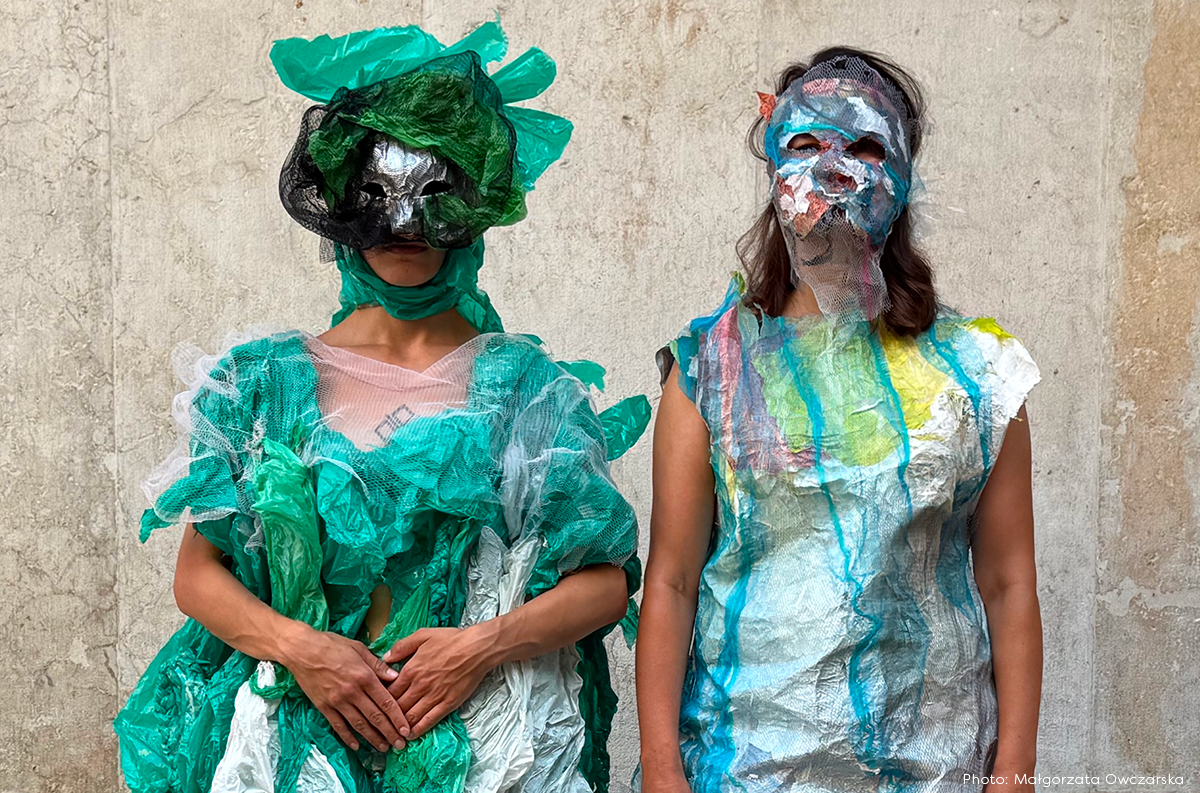
In early September 2025, I landed in Venice for the first time in my life. I was taking part in the TRACTS: Symposium on Water: Traces of Social Justice in Times of Climate Crisis, held at Ca’ Foscari University of Venice – an academic gathering dedicated to the condition of water and rivers. What fascinated me most during the research for the performance we presented there was a simple act of looking back: the ways in which Venetians once managed to collect fresh rainwater. Beneath the very stones I walked on, an entire filtration system used to operate – special channels guided rainwater into cisterns, which were guarded by appointed custodians. Everyone could draw water in a fair, regulated way. A beautiful example, if you think about it, of living within limits, cycles, and shared responsibility: water was not taken for granted, as it so often is today (think of how casually we turn on a tap), but regarded as a common good requiring care.
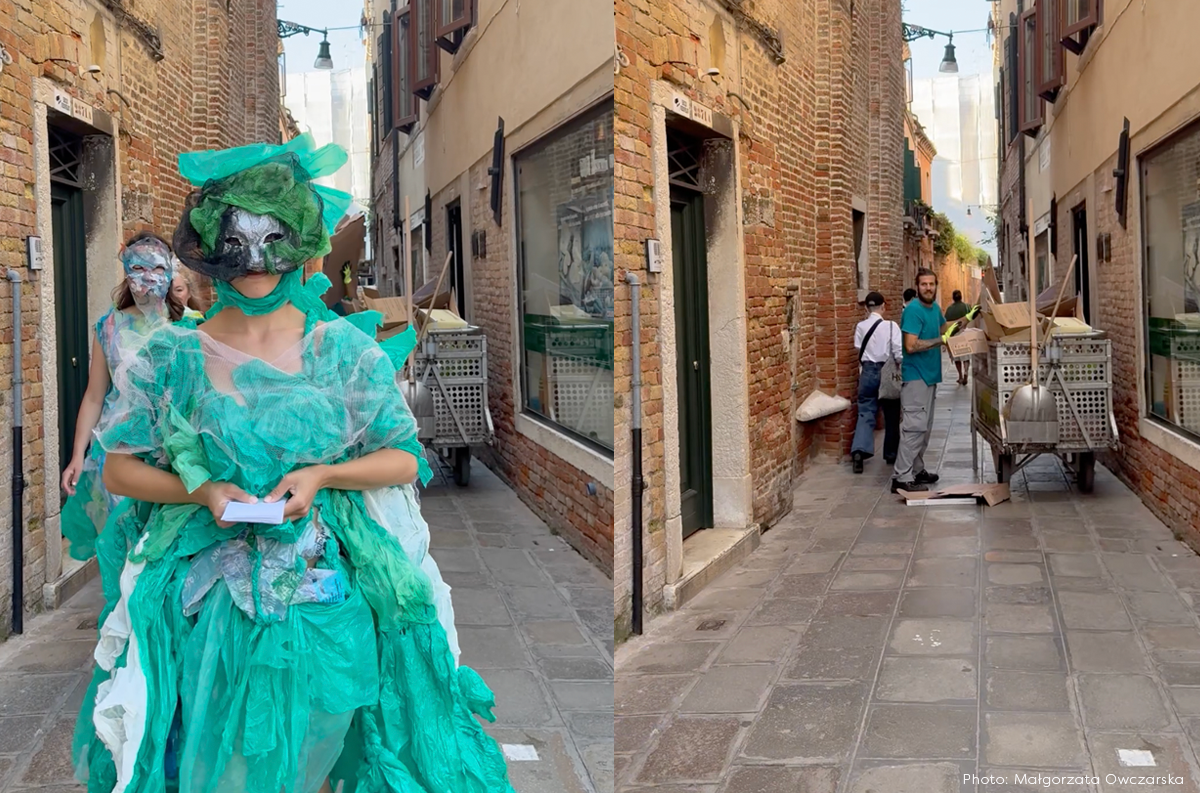
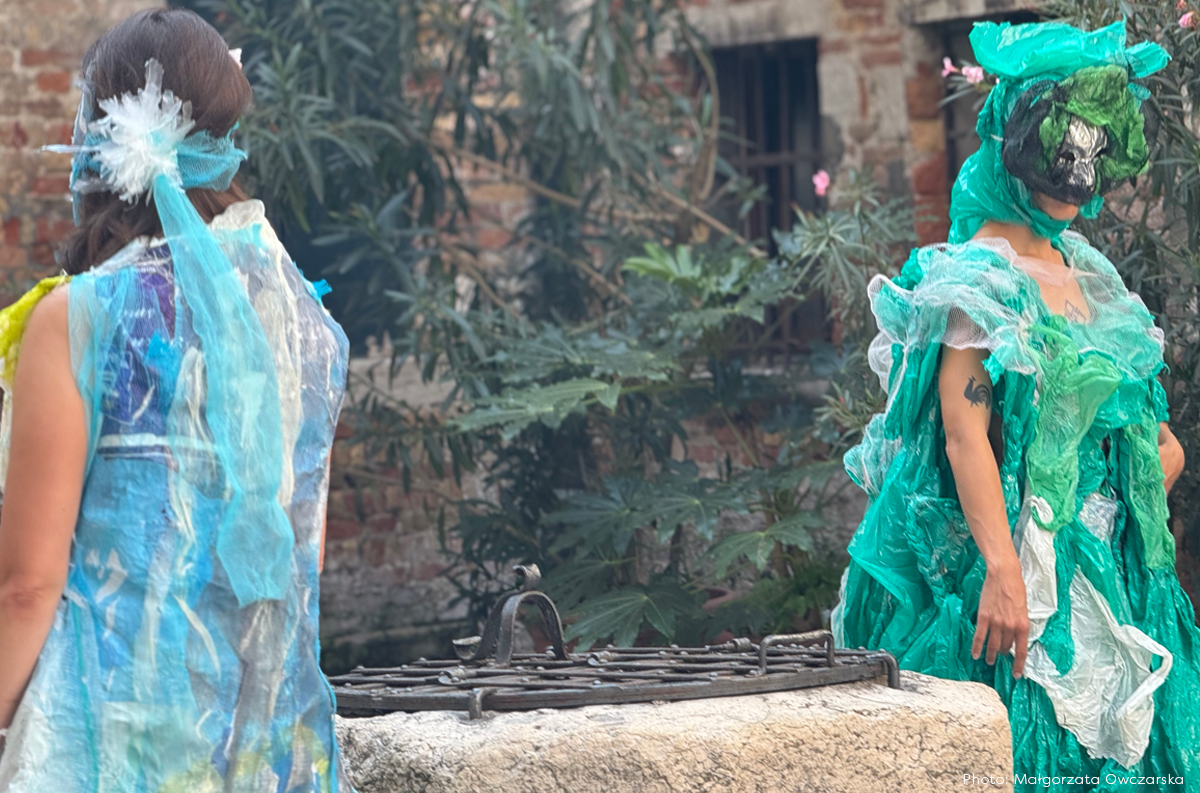
Today, in Venice, water is everywhere and yet somehow “absent” – it has ceased to exist as a practical
part of daily life. It has been reduced to a picturesque backdrop, something no one truly sees anymore.
Millions of people come here to admire gondolas, elegant palazzi, little shops full of masks and glassware,
yet they fail to notice that the city exists only because, for centuries, it developed in an intimate dialogue
with water. Instead, Venice is turning into something like a stage set for photographs, an open-air museum slowly being flooded not only by the sea, but by a rising tide of tourists. Quite the paradox, isn’t it?
And a grotesque one at that: water, once a source of life and community, is now so often treated
as a problem – an obstacle to be controlled by the MOSE system (which howled above my head on my very
first day, sending chills down my spine), or as liquid décor to be admired from the deck of an ornate boat.
part of daily life. It has been reduced to a picturesque backdrop, something no one truly sees anymore.
Millions of people come here to admire gondolas, elegant palazzi, little shops full of masks and glassware,
yet they fail to notice that the city exists only because, for centuries, it developed in an intimate dialogue
with water. Instead, Venice is turning into something like a stage set for photographs, an open-air museum slowly being flooded not only by the sea, but by a rising tide of tourists. Quite the paradox, isn’t it?
And a grotesque one at that: water, once a source of life and community, is now so often treated
as a problem – an obstacle to be controlled by the MOSE system (which howled above my head on my very
first day, sending chills down my spine), or as liquid décor to be admired from the deck of an ornate boat.
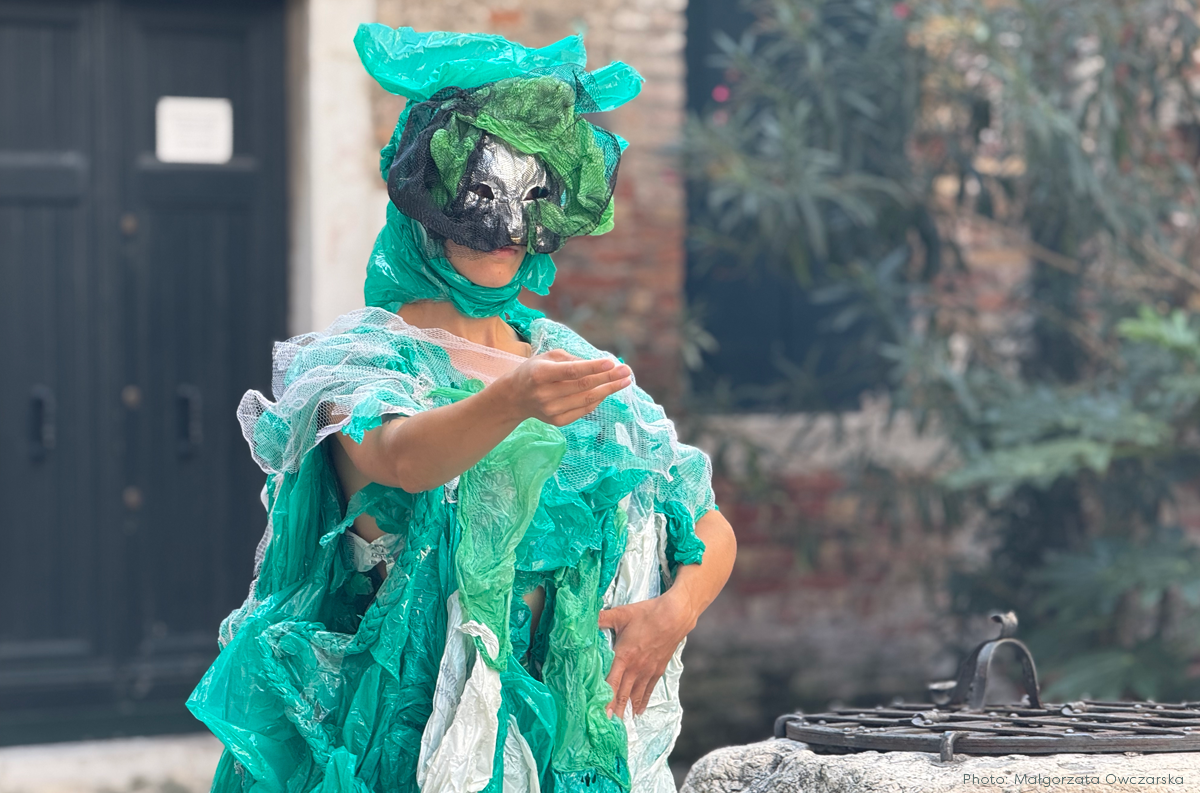
And so Venice, instead of remaining a space of respect toward the element that sustains it, is gradually
transforming into a kind of mythical Tower of Babel – a place where all the world’s languages mix
in tourist cacophony, where plastic and rubbish create a new carnival, and where, behind the beautiful
façade, cracks are slowly beginning to show. A city that dazzles and saddens at the same time –
because here, as if under a magnifying glass, you can see the oncoming catastrophe rushing toward us.
Action performed by Mo Tomaszewska & Eliza Proszczuk
transforming into a kind of mythical Tower of Babel – a place where all the world’s languages mix
in tourist cacophony, where plastic and rubbish create a new carnival, and where, behind the beautiful
façade, cracks are slowly beginning to show. A city that dazzles and saddens at the same time –
because here, as if under a magnifying glass, you can see the oncoming catastrophe rushing toward us.
Action performed by Mo Tomaszewska & Eliza Proszczuk