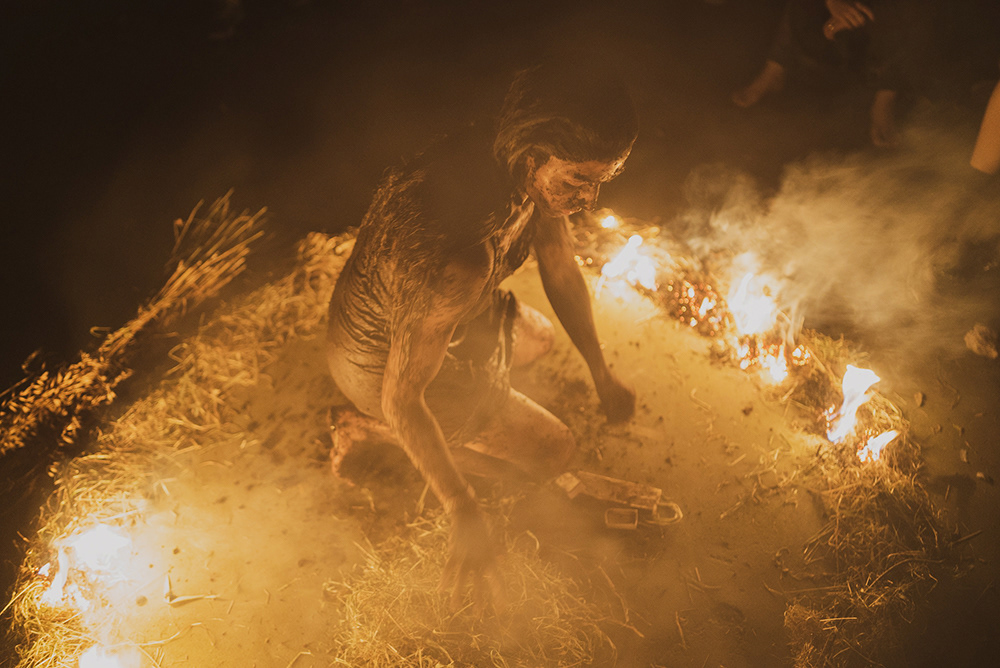
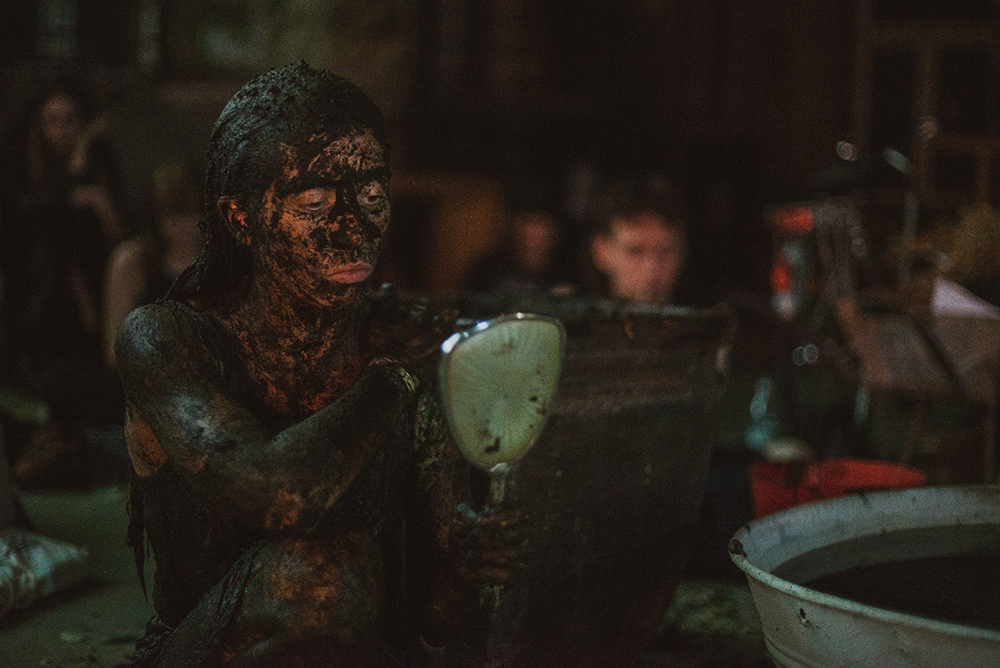
A performance referring to the relationship
between humans and the Earth,
understood as a living, corporeal entity.
The starting point for the action is the
mythical figure of Mokosz — a Slavic
goddess probably associated with Mother
Earth, fertility, and the cyclical nature
of life — as well as harvest-related
celebrations present in East-Central
European folk traditions, both in the form
of Dożynki and the Feast of the Assumption
of the Virgin Mary (Matki Boskiej Zielnej),
which carry traces of pre-Christian
agrarian rituals.
Although there is no conclusive evidence
for the continuity of the cult of Mokosz,
echoes of a pre-Christian relationship
to Nature resonate in folk rituals and
practices of thanksgiving directed
practices of thanksgiving directed
toward the land. Today, however, such
gestures often function in separation
from the real consequences of human
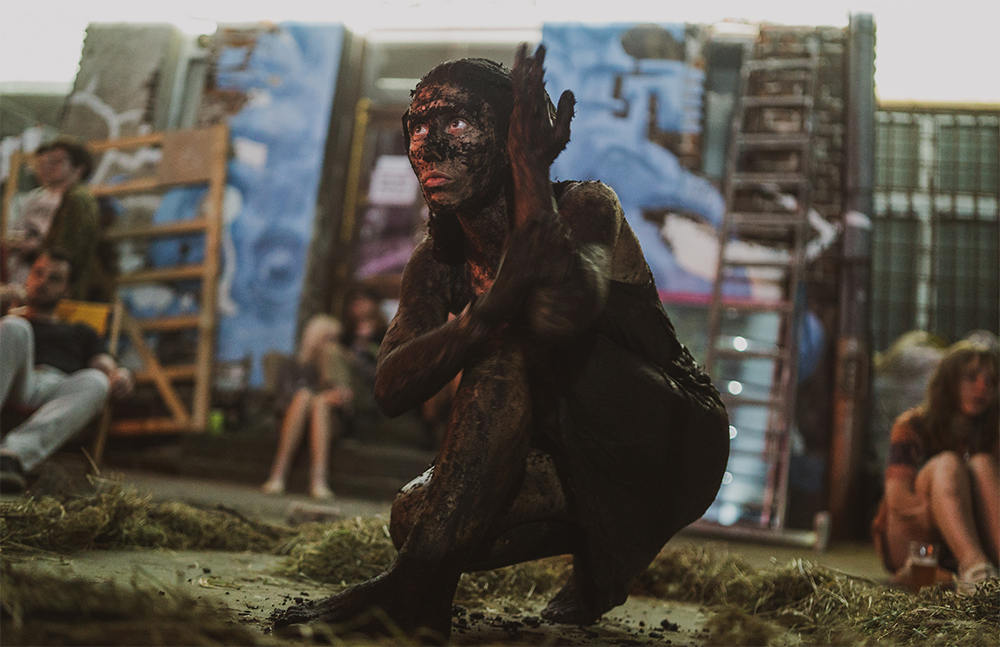
actions. The performance juxtaposes
symbolic forms of reverence and religious
celebration of moist earth, mud,
and fire with processes of environmental
degradation: deforestation, the poisoning
and concreting of rivers, and
the exploitation of land.
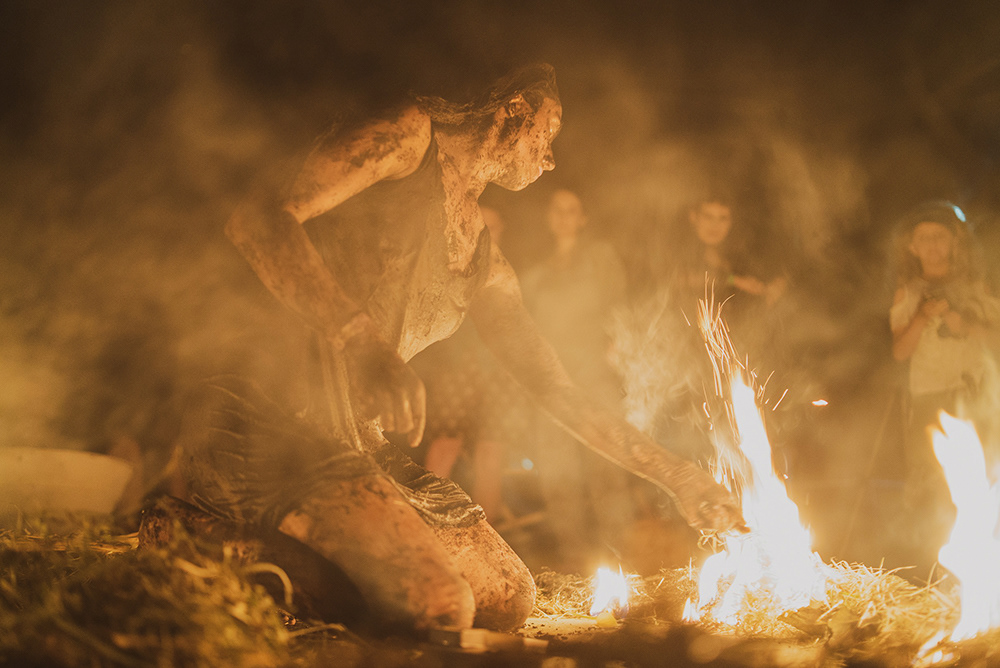
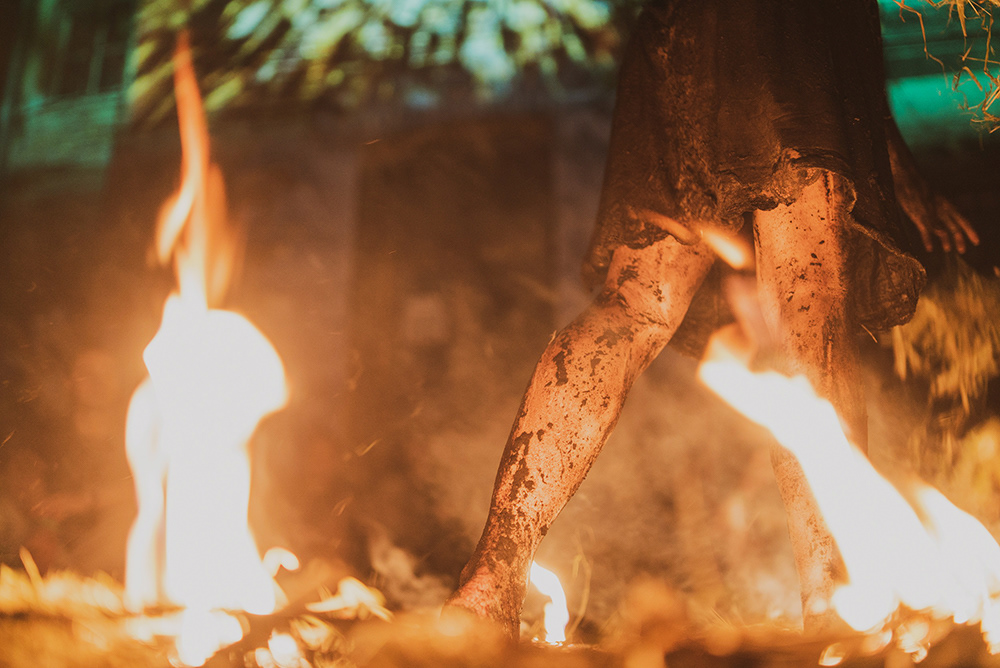
The central motif of the action is fire —
once perceived as a force of transformation
and purification, today becoming a sign of
the climate crisis. Droughts and heat waves
cause fire to consume increasing areas
of the planet.
Photo documentation: Aleksander Hordziej
KMWTW gallery, Kraków 2023